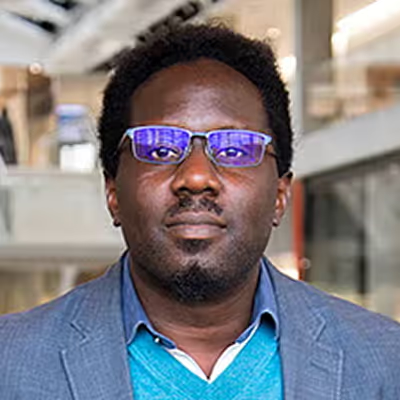
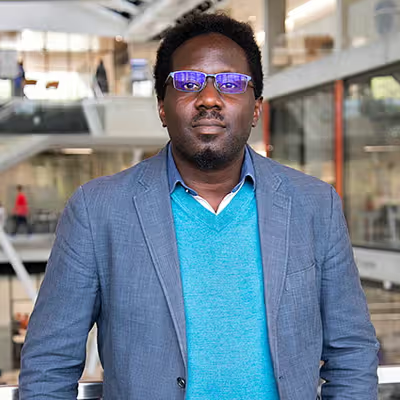
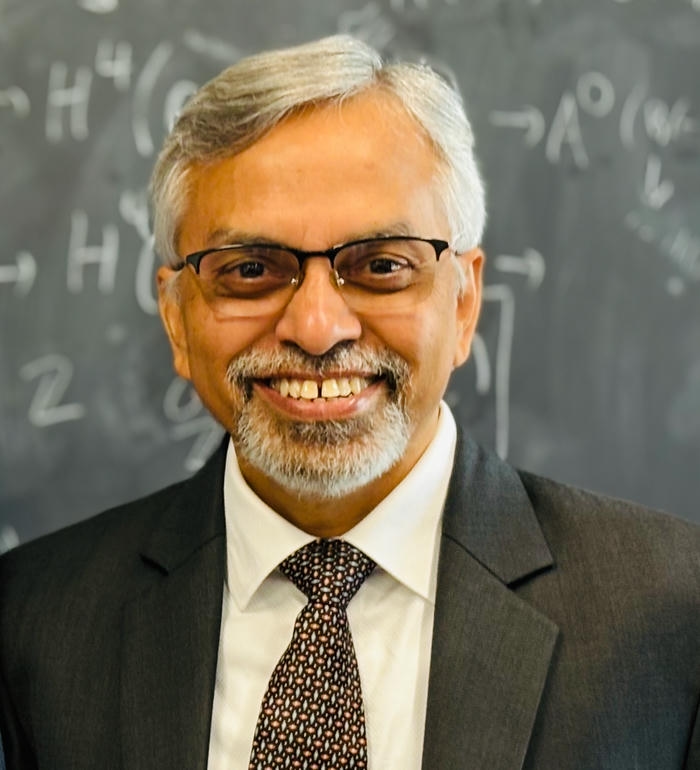
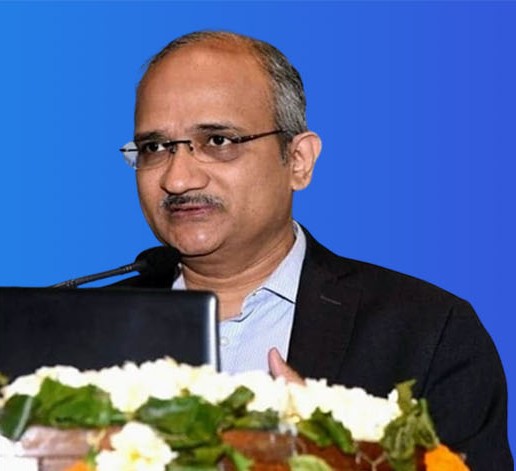
Deji Akinwande is a professor and holds the TCockrell Family Regents Chair in Engineering #8 at The University of Texas at Austin Chandra Family Department of Electrical and Computer Engineering.
He received the PhD degree in Electrical Engineering from Stanford University in 2009, where he conducted research on the material science, device physics, and circuit applications of carbon nanotubes and graphene. His Master’s research in Applied Physics at Case Western Reserve University pioneered the design and development of near-field microwave probe tips for nondestructive imaging and studies of materials.
His research focuses on 2D materials and nanotechnology, pioneering device innovations from lab towards applications.
Prof. Akinwande was elevated to IEEE Fellow in 2021, and he was named a Fellow of the American Physical Society in 2017. He has been honored with the 2018 Fulbright Specialist Award, 2017 Bessel-Humboldt Research Award, the U.S Presidential PECASE award by President Obama, the inaugural Gordon Moore Inventor Fellow award, the inaugural IEEE Nano Geim and Novoselov Graphene Prize, the IEEE “Early Career Award” in Nanotechnology, the NSF CAREER award, several DoD Young Investigator awards, the 3M Nontenured Faculty Award, and was a past recipient of fellowships from the Kilby/TI, Ford Foundation, Alfred P. Sloan Foundation, and Stanford DARE Initiative.
His recent results on silicene have been featured by nature news, Time and Forbes magazines and was selected among the top 2015 science stories by Discover magazine. He invented 2D memory, also known as atomristors. His work on flexible 2D electronics was highlighted among the “best of 2012” by the nanotechweb news portal and has been featured on MIT’s technology review and other technical media outlets. He is a distinguished lecturer of the IEEE Electron Device Society, an Editor for Nature NPJ 2D Materials and Applications, and on the editorial boards for Science, ACS Nano, and Nano letters journals. He is the co-Chair of the Gordon Research Conference on 2D electronics, and was a past Chair of the 2018/2019 Device Research Conference (DRC), and the Committee Chair of Nano-devices for 2018 IEEE IEDM Conference. He co-authored a textbook on carbon nanotubes and graphene device physics by Cambridge University Press, 2011, and was recently a finalist for the Regents’ Outstanding Teaching Award, the highest teaching award from the University of Texas System. He is a Fellow of the American Physical Society (APS).
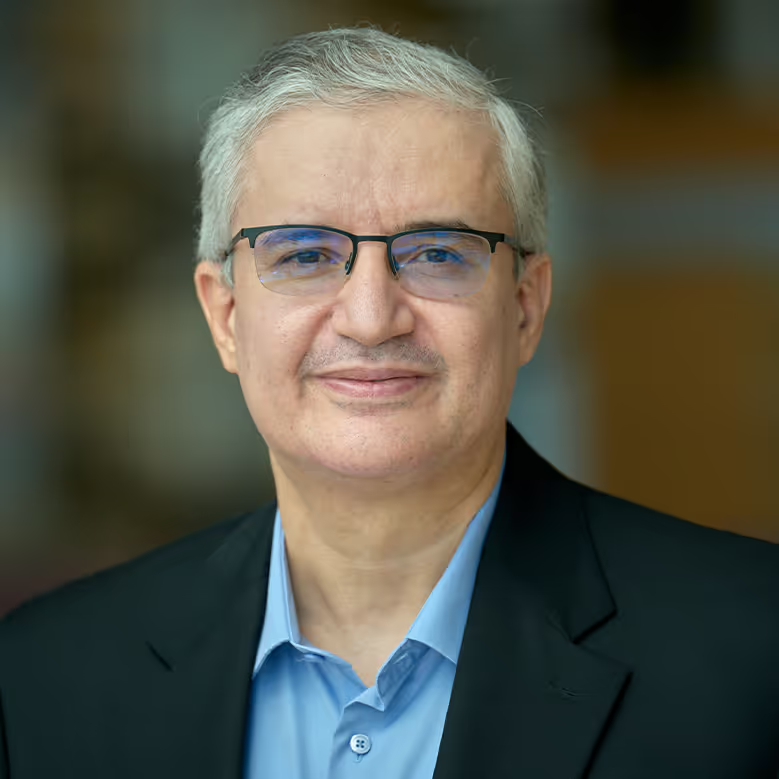
Throughout his 30-year academic career, Professor Mohamed-Slim Alouini, an IEEE and OPTICA Fellow, has developed analytical and simulation tools for evaluating the performance of radio-frequency and optical wireless communication systems. He has also designed and optimized innovative technologies for emerging wireless networks.
Professor Alouini, a co-founder of KAUST’s ECE program, inspires future engineers through his pioneering work in wireless communications. His integrated space-air-ground networks, spectrum sharing schemes, and optical wireless communication systems research shape connectivity’s future and embody KAUST’s scientific excellence and global impact.
Professor Alouini has published numerous conference and journal papers and co-authored the textbook Digital Communication over Fading Channels, published by Wiley Interscience. A former editor of IEEE Transactions on Communications and IEEE Transactions on Wireless Communication, he also served as an editor for IEEE Transactions on Mobile Computing and the Wireless Communications and Mobile Computing journal. He was also a series editor for the IEEE Communication Magazine’s Optical Communication and Networks Special Series and the founding field chief editor for the Frontiers in Communications and Networks journal. He is now the Founding Editor-in-Chief for the Nature Partnership Journal (NPJ) on Wireless Technologies (since 2025) and an editor for the IEEE Transactions on Aerospace and Electronics Systems (since 2022).
Professor Alouini has been an IEEE Distinguished Lecturer for the IEEE Communication Society (2016-2017), the IEEE Vehicular Technology Society (2018-2022), the IEEE Aerospace and Electronic Systems Society (2023-2024), and the IEEE Photonics Society (2025)
Andrea Alù is a Distinguished Professor, founding director of the Photonics Initiative at the CUNY Advanced Science Research Center, Einstein Professor of Physics at the CUNY Graduate Center, and Professor of Electrical Engineering at The City College of New York. He is affiliated with the Wireless Networking and Communications Group and the Applied Research Laboratories, both based at the University of Texas at Austin, where he is a Senior Research Scientist and Adjunct Professor. His research interests span over a broad range of technical areas, including applied electromagnetics, nano-optics and nanophotonics, microwave, THz, infrared, optical and acoustic metamaterials and metasurfaces, plasmonics, nonlinearities and nonreciprocity, cloaking and scattering, acoustics, optical nanocircuits and nanoantennas.
Aude Billard is full professor and head of the LASA laboratory at the School of Engineering at the Swiss Institute of Technology Lausanne (EPFL), and the Director of the Swiss Innovation Booster on Robotics. Dr. Billard acts as the President of the IEEE Robotics and Automation Society (RAS), after serving in several roles in the administrative and executive committees of IEEE RAS. Aude Billard holds a B.Sc and M.Sc. in Physics from EPFL and a Ph.D. in Artificial Intelligence from the University of Edinburgh. A. B. is an IEEE Fellow and the recipient of numerous recognitions, among which the Intel Corporation Teaching award, the Swiss National Science Foundation career award, the Outstanding Young Person in Science and Innovation from the Swiss Chamber of Commerce, the IEEE RAS Distinguished Award, and the IEEE-RAS Best Reviewer Award. Dr. Billard was a plenary speaker at major robotics, AI and Control conferences (ICRA, AAAI, CoRL, HRI, CASE, ICDL, ECML, L4DC, IFAC Symposium, ROMAN, Humanoids and many others) and acted on various positions on the organization committee of numerous International Conferences in Robotics. Her research spans the fields of machine learning and robotics with a particular emphasis on fast and reactive control and on safe human-robot interaction. This research received numerous best conference paper awards, as well as the prestigious King-Sun Fu Memorial Award for the best IEEE Transaction in Robotics paper, and is regularly featured in premier venues (BBC, IEEE Spectrum, Wired).
Dr. Billard was a plenary speaker at major robotics, AI and Control conferences (ICRA, AAAI, CoRL, HRI, CASE, ICDL, ECML, L4DC, IFAC Symposium, ROMAN, Humanoids and many others) and acted on various positions on the organization committee of numerous International Conferences in Robotics. Her research on human-robot interaction and robot learning from human demonstration is featured regularly in premier venues (BBC, IEEE Spectrum, Wired) and received numerous best paper awards, as well as the prestigious King-Sun Fu Memorial Award for the best IEEE Transaction in Robotics paper.
“Neuroengineering is the fusion of neuroscience and engineering. Emerging innovations and technologies from this unexpected fusion are making profound impacts on our way of life, providing new tools and solutions for the industry, medicine and the like.”
Gordon Cheng has made pioneering contributions in humanoid robotics, neuroengineering and artificial intelligence for more than 20 years. He is Chair Professor for Cognitive Systems and Director of the Institute for Cognitive Systems at the Technical University of Munich. He is the Program Director of the Elite Master of Science in Neuroengineering, a highly selective and unique study program in Germany. He is also the coordinator of the Center of Competence Neuro-Engineering. He holds more than 20 patents and has co-authored over 400 technical publications. For his “contributions in humanoid robotic systems and neurorobotics”, he was named IEEE Fellow in 2017.
Adam Dunkels, PhD, is an independent consultant and a pioneer in the Internet of Things area. Many Internet of Things products run software he has developed, including the Contiki operating system, the uIP and lwIP TCP/IP stacks, and the protothreads programming abstraction.
In the past decade, he has built over 30 IoT products with over a million units shipped in total with both multinational industrial companies and startups.
The MIT Technology Review named him a TR35, top 35 innovator under 35. He has also received the ACM SIGOPS EuroSys Roger Needham award and the ERCIM Cor Baayen award. He is a co-founder of the IPSO Alliance together with a group of major IoT industry vendors. He has authored and co-authored over 80 scientific papers and has served on many top-tier program committees. His book, Interconnecting Smart Objects with IP – the Next Internet”, was co-authored with JP Vasseur and with a foreword by Vint Cerf.
Prof. Fang has been working in the MEMS field for more than 20 years. He received his Ph.D. degree from Carnegie Mellon University (Pittsburgh, PA) in 1995. His doctoral research focused on the determining of the mechanical properties of thin films using MEMS structures. He joined the Power Mechanical Engineering Department at the National Tsing Hua University (Taiwan) in 1996, where he is now a Chair Professor as well as a faculty of NEMS Institute. From June to September 1999, he was at California Inst. of Tech. as a visiting associate. He became the IEEE Fellow in 2015 to recognize his contribution in MEMS area.
Prof. Fang has published more than 170 SCI journal papers, 350 international conference papers, and 100 patents (all in MEMS field). He is now the Chief Editor of JMM (IoP, UK), the Board Member of IEEE Trans on Device and Materials Reliability, and Sensors and Materials, and the Associate Editor of IEEE Sensors J. He served as the Chief Delegate of Taiwan for the World Micromachine Summit (MMS) in 2008-2012, and the General Chair for MMS 2012. He also served as the TPC (Tech. program committee) of IEEE MEMS’04, ’07, and ’10, the TPC of Transducers’07, and the ETPC (Executive TPC) of Transducers’09-’15. He has become the member of ISC (International steering committee) of Transducers from 2009-2017, and was the General Chair of Transducers’17. He serves as the Asia Regional Program Chair of IEEE Sensors’10, and the TPC Chair of IEEE Sensors’12.
There are more than 50 PhD and 100 Master students graduated from Prof. Fang’s group so far. Most of them are working in the MEMS and micro sensors related companies, such as TSMC, UMC, ASE, apm, Apple, xMEMS, TDK-InvenSense, Coretronic MEMS, Sensortek, Delta, PixArt, mCube, etc. He is now the Vice Chairman of the MEMS and Sensors Committee of SEMI Taiwan. He is the Standing Committee Member of the Nanotechnology and Micro System Association (NMA), Taiwan. He also served as the Chairman of NMA from 2013-2014. Moreover, Prof. Fang also serves as the Technical Consultant for many MEMS companies in Taiwan.
Professor Gao’s primary research interest is in the development of novel bioelectronic devices for personalized and precision medicine: wearable and flexible biosensors that can analyze the various biomarkers in body fluids for real-time continuous health monitoring and early diagnosis, and synthetic micro/nanomachines for rapid drug delivery and precision surgery. His research thrusts include fundamental materials innovation as well as practical device and system level applications in translational medicine.
Kenny’s group is researching fundamental issues and applications of micromechanical structures. These devices are usually fabricated from silicon wafers using integrated circuit fabrication tools. Using these techniques, the group builds sensitive accelerometers, infrared detectors, and force-sensing cantilevers. This research has many applications, including integrated packaging, inertial navigation, fundamental force measurements, experiments on bio-molecules, device cooling, bio-analytical instruments, and small robots. Because this research field is multidisciplinary in nature, work in this group is characterized by strong collaborations with other departments, as well as with local industry.
Executive Office of the President of the United States of America
About Dr. John Kitching
Dr. John Kitching is the Leader of the Atomic Devices and Instrumentation Group in NIST’s Physical Measurements Laboratory and a NIST Fellow. He received his PhD in Applied Physics from the California Institute of Technology in 1995. He and his group pioneered the development of microfabricated “chip-scale” atomic devices for use as frequency references, magnetometers and other sensors. He has published over 100 papers in refereed journals, has given numerous invited and plenary talks and has been awarded eight patents.
Dr. Rakesh Kumar Rakesh has a distinguished semiconductor industry career, is an entrepreneur, and an educator. He is the founder of two start-ups and has made many technical and leadership contributions at Cadence, Unisys, and Motorola. He has developed leading semiconductor technologies. As VP and & GM at Cadence he built a successful Silicon Technology services business championing the integration of silicon, design and EDA in chip and system design. He enabled the Fabless industry revolution and authored McGraw Hill’s “Fabless Semiconductor Implementation”. He is an IEEE Life Fellow, was inducted into the Technical Activities Hall of Honor. His many IEEE contribution include Chair of the President’s Data AdHoc & Roadmaps Committees, Co-Chair of DataPort, Past-President of SSCS, TA Chair for 3 Sections Congresses. He teaches Entrepreneurship at UC San Diego.
He received the EE Ph.D. and M.S. from Univ. Rochester (1974, 1971), BTech. from IIT-Delhi (1969), and Executive “MBA” from UCSD (1989.)
Prof. Lumelsky holds Ph.D. in Applied Mathematics, 1970, from Institute of Control Sciences (ICS), National Academy of Sciences, Moscow, Russia, and BS/MS in Computer Science from ITMO University (former LITMO), St. Petersburg, Russia. Prior to moving to USA in 1975, he held academic positions with ICS, doing research in pattern recognition and automatic control, and teaching as adjunct professor at Moscow Institute of Radio-Electronics & Automation. Thereafter he worked in USA industry, academia, and federal government, holding research and faculty positions with: 1976-80, Ford Motor Co. Scientific Labs, Dearborn MI; 1980-85, General Electric Co. Research, Schenectady NY; 1985-90, Associate Professor, Yale University; 1991-2004, Chaired Professor of Engineering, University of Wisconsin-Madison, with joint appointments at Mechanical Engrg, Electrical Engrg, Computer Science, and Mathematics departments. In 1999-2001 Dr. Lumelsky held the administrative position of Program Director at National Science Foundation and NSF Representative at USA South Pole Station. In 2004-2012 he worked as senior resercher at NASA-Goddard Space Center, leading the space robotics laboratory and doing research in flight dynamics; concurrrently he was adjunct professor, University of Maryland-College Park. He held visiting professor positions at Tokyo Institute of Science, Japan (1987), Weizmann Institute, Israel (1998); Weston Visiting Professor, Math & CS Dept, Weizmann Institute (2014-2015). Dr. Lumelsky is currently Professor Emeritus, University of Wisconsin-Madison, and independent consultant. He has been consulting widely for industry, NSF, DoD/DARPA, European Commission, other countries, and as technical witness/expert in court litigation. Dr. Lumelsky has authored over 250 publications (books, journals, conferences, reports); is Founding Editor-in-Chief of IEEE Sensors Journal; served as President of IEEE Sensors Council. He is Fellow of Rockefeller Bellagio Center, and IEEE Life Fellow.
George Malliaras is the Prince Philip Professor of Technology at the University of Cambridge. He received a BS in Physics from the Aristotle University (Greece) in 1991, and a PhD in Mathematics and Physical Sciences, cum laude, from the University of Groningen (the Netherlands) in 1995. After postdocs at the University of Groningen and at the IBM Almaden Research Center (California), he joined the faculty in the Department of Materials Science and Engineering at Cornell University (New York) in 1999. From 2006 to 2009 he served as the Lester B. Knight Director of the Cornell NanoScale Science & Technology Facility. He moved to the Ecole des Mines de St. Etienne (France) in 2009, where he started the Department of Bioelectronics and served as Department Head. He joined the University of Cambridge in 2017.
Prof. Malliaras leads the Bioelectronics Laboratory, an interdisciplinary group of scientists, engineers and clinicians who harness the power of electronics to develop and translate innovative medical devices. His research on organic electronics and bioelectronics has been recognised with awards from the European Academy of Sciences (Blaise Pascal Medal), the Materials Research Society (Mid-Career Researcher Award), the New York Academy of Sciences (Blavatnik Award for Young Scientists), the US National Science Foundation (Faculty Early Career Development Award), and DuPont (Young Professor Award). He was awarded an Honorary Doctorate from the University of Linköping (Sweden), and is a Fellow of the Royal Society, the Materials Research Society, Academia Europaea and the European Academy of Sciences.
Prof. Malliaras is a co-author of 300+ publications in peer-reviewed journals that have received over 60,000 citations.
Franco Maloberti graduated in Physics with Honors in 1968; after a year at the University of L’Aquila, he moved to the University of Pavia in 1969, where he is now Professor Emeritus. He received two Honorary Doctorates, the first from the Instituto Nacional de Astrofisica Optica y Electronica, Puebla, Mexico, in 1996, and the second in Science from the University of Macau in 2023. He was the first Professor awarded the chair dedicated to Jack Kilby (Nobel Prize 2000 for the invention of integrated circuits) at Texas A&M University, College Station, and Microelectronics Chair Professor at the University of Dallas. He has been a visiting professor at the Zurich Polytechnic (ETH) and the Lausanne Polytechnic (EPFL). At the University of Pavia, Prof. Maloberti has supervised more than 260 master’s theses and twenty-eight PhDs in circuits, systems, and analog microelectronics. Furthermore, he has co-supervised four PhDs from EPFL Lausanne, a PhD from ITU Istanbul, and a PhD from the University of Macao. As a professor at Texas A&M University, he supervised 11 doctoral and five master’s students. As a professor at UTD Dallas, he supervised eight PhD and seven master’s students.
His scientific interests span from switched capacitors to data converters, interfaces for sensors, and portable power management. He has written over 620 publications, ten books, and holds 41 patents. Of the 620 publications, 139 describe microelectronic circuits fabricated and measured with innovative features. In 1992, he received the XII Pedriali Prize for his technical-scientific contribution to national industrial production. He received the IEEE CAS Society Meritorious Service Award in 1999, the CAS Society Jubilee Gold Medal in 2000, and the IEEE Millenium Medal. He received the 1996 IEE Fleming Premium, the 2007 ESSIRC Best Paper Award, and the 2007 and 2010 IEEJ Workshop Best Paper Awards. He received the 2013 IEEE CAS Society Mac Van Valkenburg Prize. He was president of the IEEE Sensor Council and the IEEE CAS Society. He was the Division I director if IEEE (2022-2023). He is an IEEE Life Fellow.
Department of Electrical, Electronic, and Information Engineering "Guglielmo Marconi", Bologna
About Cecilia Metra
Cecilia Metra is Full Professor of Electronics at the University of Bologna, where she has been working since 1991, and from which she received the Laurea in Electronic Engineering (summa cum laude) and the PhD in Electronic Engineering and Computer Science. She has been Vice-President and President of the School of Engineering of the University of Bologna. In 2002, she was Visiting Faculty Consultant for Intel Corporation (Santa Clara, California). She is part of the Italian National Center on High Performance Computing, Big Data and Quantum Computing (September 2022-present), and of the Italian Research Project on Security and Rights In the CyberSpace – SERICS (January 2023-present).
She is the 2024 IEEE Director-Elect, Division VIII (and will be the 2026-2025 IEEE Director, Division VIII), and was the 2023-2022 IEEE Director, Division V, and the 2019 President of the IEEE Computer Society.
She is Co-Chair of the IEEE Future Directions “IEEE Metaverse” Initiative, and a member of the IEEE Conferences Committee (2021-2024). She was a member of the IEEE European Public Policy Committee – EPPC (2020-2023), of the IEEE Smart Village Governing Board (2020-2023), of the IEEE Award Committee (2022-2023), of the IEEE Theodore W. Hissey Outstanding Young Professional Award Committee (2022-2023), of the IEEE Young Professionals Committee (2021-2022), of the IEEE Diversity & Inclusion Committee (2020-2023). 22), of the IEEE TAB/PSPB Products and Services Committee (2020). She was Co-Chair of the IEEE EPPC Working Group on ICT (2021-2022) and of the IEEE Digital Reality Initiative Project on “Reliable, Safe, Secure and Time Deterministic Intelligent Systems” (2019-2022), and a member of the IEEE Systems Council Advisory Committee (2020-2022), the IEEE Council on Electronic Design Automation (CEDA) Board of Governors (2015-2017), and of the IEEE Computer Society Board of Governors (2013-2017).
She was Editor-in-Chief of the IEEE Transactions on Emerging Topics in Computing and of Computing Now, and Associate Editor-in-Chief of the IEEE Transactions on Computers. She has contributed to numerous IEEE international cConferences/Symposia/Workshops/Summits/Meetings as General/Program Chair/Co-Chair (19 times), technical program committee member (more than 100 times), and keynote/invited speaker/panelist (more than 50 times).
She has published (more than 200 papers) in international journals/Proceedings of international peer-reviewed conferences on test and test-oriented design of electronic circuits/systems, on reliable, safe, secure and fault-resilient electronic circuits/systems, on circuits/systems for Artificial Intelligence (AI), on fault tolerance techniques, on error-correcting codes, secure communication protocols, photovoltaic and energy harvesting systems, emerging technologies. Her research has received public and private funding (e.g., from the EU, the Italian Ministries MISE and MIUR, and from Industries such as Intel Corporation, STMicroelectronics, Alstom Transport, Thales, etc.) at national and international level.
She is an IEEE Fellow, an IEEE Computer Society Golden Core Member, and a member of the IEEE Honor Society IEEE-HKN. She received two Meritorious Service Awards, eight Certificates of Appreciation, and the Spirit of the Computer Society award from the IEEE Computer Society.
Khalil Najafi received the B.S., M.S., and the Ph.D. degree in 1980, 1981, and 1986 respectively, all in Electrical Engineering from the Department of Electrical Engineering and Computer Science, University of Michigan, Ann Arbor. From 1986-1988 he was employed as a Research Fellow, from 1988-1990 as an Assistant Research Scientist, from 1990-1993 as an Assistant Professor, from 1993-1998 as an Associate Professor, and since September 1998 as a Professor in the Department of Electrical Engineering and Computer Science, University of Michigan. He served as the Director of the Solid-State Electronics Laboratory from 1998-2005, has been the director of NSF’s National Nanotechnology Infrastructure Network (NNIN) since 2004, and the deputy director of the NSF ERC on Wireless Integrated Microsystems (WIMS) at the University of Michigan. His research interests include: micromachining technologies, micromachined sensors, actuators, and MEMS. analog integrated circuits. implantable biomedical microsystems. micropackaging. and low-power wireless sensing/actuating systems.
Prof. Najafi was awarded a National Science Foundation Young Investigator Award from 1992-1997, and has been active in the field of solid-state sensors and actuators for more than twenty years. He has been involved in several conferences and workshops dealing with micro sensors, actuators, and microsystems, including the International Conference on Solid-State Sensors and Actuators, the Hilton-Head Solid-State Sensors and Actuators Workshop, and the IEEE/ASME Micro Electromechanical Systems (MEMS) Conference. Prof. Najafi is an Associate Editor for the IEEE Journal of Micro Electromechanical Systems (JMEMS), and the Journal of Micromechanics and Microengineering, Institute of Physics Publishing, and an editor for the Journal of Sensors and Materials. He also served as the Associate Editor for IEEE Journal of Solid-State Circuits from 2000-2004, the Editor for Solid-State Sensors for IEEE Transactions on Electron Devices from 1996-2006, and the associate editor for IEEE Trans. Biomedical Engineering from 1999-2000. He is a Fellow of the IEEE and the AIBME.
Dr. Rudra Pratap is the Founding Vice Chancellor of Plaksha University. Prior to joining Plaksha University, he served as the Deputy Director of Indian Institute of Science, Bengaluru, Founding Chairperson of the Centre for Nano Science and Engineering (CeNSE) and a Professor in the Centre, as well as of Mechanical Engineering at IISc, Bengaluru.
A pioneer in the field of Micro and Nano-Electro-Mechanical Systems, Dr. Pratap has been associated with the Indian Institute of Science (IISc), Bengaluru for almost 25 years (1996- 2021) and is credited for establishing the globally recognized Centre for Nano Science and Engineering at IISc. He was also an invited Professor at EPFL, Lausanne, Switzerland in 2004-05. Prior to joining IISc in 1996, he taught at the Sibley School of Mechanical and Aerospace Engineering, Cornell University, for 2.5 years.
Dr. Pratap holds a BTech (Hons) degree from IIT Kharagpur, MS from the University of Arizona and PhD from Cornell University.
An avid writer, Dr. Pratap’s book Getting Started with MATLAB: A Quick Introduction for Scientists and Engineers is popular among engineering students around the globe. He is also an Associate Editor of the IEEE Journal of Microelectromechanical Systems and a member of the Editorial Board of the Journal of Micromechanics and Microengineering. He has published approximately 250 papers in peer-reviewed journals and conference proceedings.
Prof. V. Ramgopal Rao is currently the Group Vice-Chancellor for the Birla Institute of Technology & Science (BITS) Pilani campuses located in Pilani, Hyderabad, Goa, Dubai and Mumbai. Prior to joining the BITS Group in 2023, Prof. Rao had served as the Director of IIT Delhi for 6 years during 2016-2021 and as a Chair Professor for Nanoelectronics at both IIT Bombay and IIT Delhi.
Prof. Rao is an internationally acclaimed Nanoelectronics researcher with over 500 research papers and over 50 patents, which include 20 issued US patents. 15 of his patents have been licensed to industries for commercialization. The IP on CMOS-SoC applications developed in his group is now used in 100’s of millions of ICs sold all over the world. Prof. Rao is a co-founder of two deep technology startups at IIT Bombay (Nanosniff & Soilsens) which have successful commercial products in the market. Besides his education and research activities, Prof. Rao is also well known for establishing major Nanoelectronics Programmes in India. For his research accomplishments, Dr. Rao has been elected a Fellow of IEEE, a Fellow of The World Academy of Sciences (TWAS), the Indian National Academy of Engineering (INAE), the Indian Academy of Sciences (IASc), the National Academy of Sciences (NASI) & the Indian National Science Academy (INSA). 52 Ph.D. students have graduated so far under his supervision and are working in leading academic institutions, semiconductor industries all over the world, including in India.
Prof. Rao’s research and leadership contributions have been recognized with over 35 awards and honors in the country and abroad. He is a recipient of three honorary doctorates. The recognitions Prof. Rao received include the Shanti Swarup Bhatnagar Prize in Engineering Sciences, Infosys Prize, IEEE EDS Education Award (the highest international award bestowed by IEEE Electron Devices Society for Education) and many others. Prof. Rao serves on the Editorial Advisory Boards of several leading international journals such as the ACS Nano Letters, AIP Applied Physics Reviews, IEEE Journal on Flexible Electronics etc. Dr. Rao has delivered over 200 Plenary, key-note and invited lectures all over the world.
Besides his regular responsibilities at BITS Pilani, Prof. Ramgopal Rao serves as a Chairman for multiple committees at the National level related to Education, Research and Innovation programmes in India. He is currently the Chairperson, Council of Management (BoG) for the Jawaharlal Nehru Centre for Advanced Scientific Research (JNCASR) in Bangalore. He served as the Chairperson, Board of Governors for the National Institute of Food Technology Entrepreneurship and Management (NIFTEM) in Haryana and multiple other Govt of India institutions.
Visit the Linkedin profile of Prof. Ramgopal Rao for his views on various matters concerning Higher Education.
Dr Anil K. Roy is a Visiting Professor at Plaksha. He is an alumnus of IIT Delhi and IIT Roorkee, and earned his PhD in Physics from IIT Delhi in 1993. Prior to joining Plaksha, he was with DA-IICT, Gandhinagar for 22 years where he taught courses such as Introduction to ICT, Engineering Design Workshop, Engineered Materials, Electromagnetic Theory, Solid State Devices, and Optical Fiber Communication. He has also worked at the Centre for Theoretical Studies, Indian Institute of Science, Bangalore, and later at the Optical Fiber Group, IIT Delhi.
Dr Roy is a senior member of IEEE, a member of Optica (formerly OSA), and a member of the Optical Society of India. He currently serves as the President-elect of the IEEE Sensors Council (2024–2025), the largest technical council within IEEE. He has also served as Chair of the IEEE Conference Publications Committee (2019–2020).
His honors include the 2019 IEEE India Council Section Chair Lifetime Achievement Award, the 2017 IEEE Sensors Council Meritorious Service Award, the 2012 IEEE MGA Leadership Award, and the 2010 IEEE Region 10 Outstanding Volunteer
Shervin Shirmohammadi received his Ph.D. in Electrical Engineering in 2000 from the University of Ottawa, Canada, and after spending 3 years in the industry as a senior architect and project manager, joined as Assistant Professor the same University, where since 2012 he has been a Full Professor with the School of Electrical Engineering and Computer Science. He is Director of the Discover Laboratory, doing research in AI-assisted measurements, especially vision-based measurement, IoT measurements, and multimedia and network measurements. The results of his research, funded by more than $28 million from public and private sectors, have led to over 400 publications, 4 Best Paper awards, over 70 researchers trained at the postdoctoral, PhD, and Master’s levels, 30+ patents and technology transfers to the private sector, and a number of awards. He is the founding Editor-in-Chief of the IEEE Open Journal of Instrumentation and Measurement, was the Editor-in-Chief of the IEEE Transactions on Instrumentation and Measurement from 2017 to 2021, the Associate Editor-in-Chief of IEEE Instrumentation and Measurement Magazine in 2014 and 2015, and is currently on the latter’s editorial board.
He has been an IEEE Instrumentation and Measurement Society (IMS) AdCom member since 2014, currently serves as its Executive Vice President, and was a Board of Directors member of IMS’s flagship conference IEEE I2MTC from 2014 to 2016.
Dr. Shirmohammadi is an IEEE Fellow “for contributions to multimedia systems and network measurements”, winner of the 2019 George S. Glinski Award for Excellence in Research, winner of the 2021 IEEE IMS Distinguished Service Award, winner of the 2023 IEEE IMS Technical Award “for contributions to the advancement of machine learning-assisted measurements”, a Senior Member of the ACM, a University of Ottawa Gold Medalist, and a licensed Professional Engineer in Ontario.
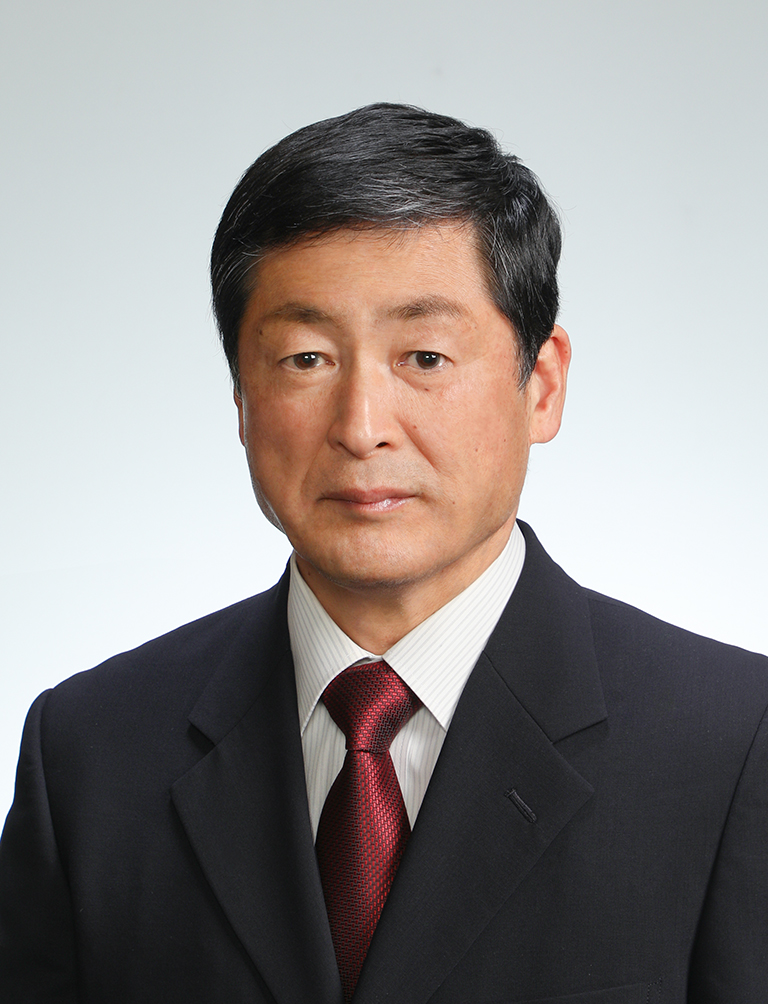
Nobukazu Teranishi is a specially appointed professor at Shizuoka University. Since 1978, he has developed image sensors at NEC Corporation (1978 – 2000) , Panasonic Corporation (2000 -2013), University of Hyogo (2013 – 2022), and Shizuoka University (2013 – Present). His leadership and image sensor technology development, including the pinned photodiode invention, were honored by the government organizations as well as societies; He won the National Invention Awards, Commendation by Minister of State for Science and Technology, Niwa-Takayanagi Award from the Institute of Image Information and Television Engineers (ITE), IEEE EDS J. J. Ebers Award, a Fellow of the ITE, and a Fellow of the IEEE, the Queen Elizabeth Prize for Engineering, an Medal of Honor with Purple Ribbon, and the Technology & Engineering Emmy Award. He co-founded the IISS and was its 2nd President. He has authored and co-authored 46 journal papers and holds 46 Japanese patents and 21 US patents.
Nobukazu Teranishi
Shizuoka University, Japan
Nobukazu Teranishi is now Specially Appointed Professor at Research Institute of Electronics, Shizuoka University. He has been developing CCD image sensors and CMOS image sensors at NEC, Panasonic, University of Hyogo and Shizuoka University for 48 years. He is the inventor of pinned photodiode technology, which is used at almost all CCD image sensors and CMOS image sensors to achieve low dark current, large saturation, no image lag and low noise. Under his leadership, many image sensors have been developed, which are for movies, digital still cameras, mobile phone cameras, medical use cameras, broadcast cameras and so on. He is a laureate of Queen Elizabeth Prize for Engineering, the Purple Medal from the Emperor, IEEE EDS J. J. Ebbers Award, Emmy award. He is a founder of International Image Sensor Society (IISS) and served as the president of IISS. He also served as guest editors for special issues on image sensors including IEEE Transactions on Electron Devices. He has authored and co-authored 47 journal papers and holds 46 Japanese patents and 21 US patents.
John Paul Verboncoeur is an American electrical engineer and computational plasma physicist. He is a professor of electrical and computer engineering and of computational mathematics, science, and engineering at Michigan State University, where he also serves as senior associate dean for research and graduate studies in the College of Engineering.[1] He was elected a Fellow of the Institute of Electrical and Electronics Engineers (IEEE) in 2013 for contributions to computational plasma physics and plasma device applications.
Verboncoeur is the author and coauthor of the MSU (formerly Berkeley) suite of particle-in-cell Monte Carlo (PIC-MC) plasma simulation codes, including XPDP1 and XOOPIC, which have been used by more than 1,000 researchers worldwide.[3] He has served in senior leadership roles within the IEEE, including as president of the IEEE Nuclear and Plasma Sciences Society (2015–2016), IEEE Division IV director (2019–2020), and vice president of IEEE Technical Activities (2023).