Talk: Flexible and printed Electronics, E-Skin, Robotics
Biography
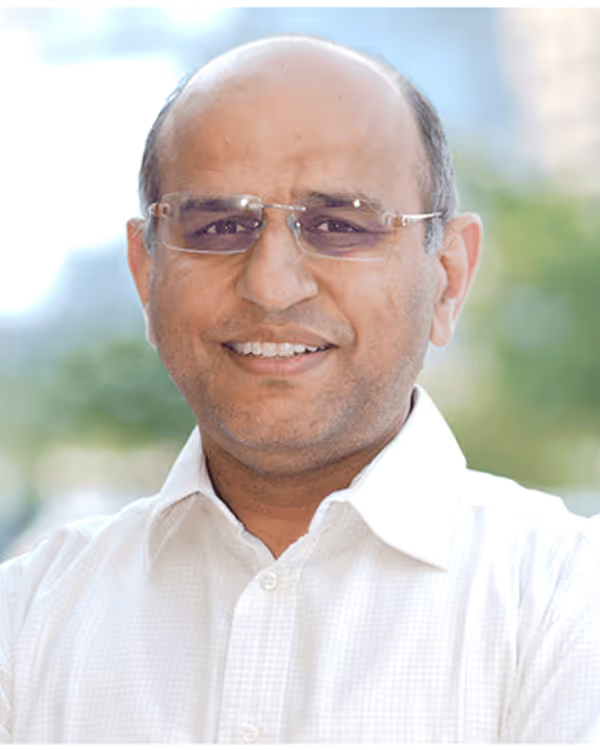
Dr Dahiya is a Professor in the Electrical and Computer Engineering Department at Northeastern University, Boston, USA, where he also leads the Bendable Electronics & Sustainable Technologies (BEST) group. His multidisciplinary research interests include flexible, printed and transient electronics, robotic tactile sensing, electronic skin, haptics, wearables and intelligent interactive systems. He has authored or co-authored approximately 500 research publications, books, and submitted or granted patents and disclosures. He has delivered more than 240 keynote and invited lectures, including a TEDx talk. He has led or participated in numerous national and international research projects worth more than £50 million, with his share amounting to approximately £20 million. These include fellowships, such as EPSRC, Newton and Marie Curie Fellowships; training networks, including the EU’s Marie Curie Innovative and Doctoral Training Networks; research grants from funding bodies such as NSF, the EU and EPSRC; and several industry projects. He serves on the IEEE Board of Directors as Director, Division X. He served as President of the IEEE Sensors Council (SC) during 2022–2023. Several new initiatives were launched during his presidency, including new journals—IEEE Sensors Reviews, IEEE J-SAS, IEEE J-ISPIN and IEEE TAFE—and new conferences, including IEEE Biosensors, IEEE APSCON, IEEE Sensors in Spotlight and IEEE CAFE. Other initiatives included the Journal–Conference Synergy Initiative and the expansion of the Council’s Executive Committee, including the introduction of the Vice President for Education role. He also led the Council’s 25th anniversary celebrations. The Council’s industry programme was revamped during his presidency. He currently serves as the Editor-in-Chief (EiC) of npj Flexible Electronics and has served on the editorial boards of several leading journals, including as the founding EiC of the IEEE Journal on Flexible Electronics. He has also edited several special journal issues and organised numerous international workshops and conferences. He served as a Distinguished Lecturer of the IEEE Sensors Council from 2016 to 2021. He founded the IEEE International Conference on Flexible, Printable Sensors and Systems (FLEPS), the IEEE Journal on Flexible Electronics, the IEEE Sensors Reviews Journal and the IEEE UKRI chapter of the Sensors Council. He has held the EPSRC Fellowship, Marie Curie Fellowship and Japanese Monbusho Fellowship. He has received several awards and honours, including the IEEE Sensors Council’s Technical Achievement Award and the Microelectronic Engineering Young Investigator Award. He has also received 13 best paper awards as an author or co-author in journals and at international conferences. He is a Fellow of IEEE and the Royal Society of Edinburgh.
NXP Semiconductors, High Tech Campus, Eindhoven, The Netherlands
Talk: When Edge AI met LLMs.
Importance of Being Data: Automotive Radar Machine Learning.
Biography
Ashish Pandharipande received the M.S. and Ph.D. degrees in Mathematics, Electrical and Computer Engineering fromthe University of Iowa, Iowa City, IA, USA, in 2000, 2001, and 2002. He is currently a Technical Director with NXPSemiconductors, and a part-time Full Professor with Eindhoven University of Technology, both in Eindhoven, Netherlands.His research interests include sensing, machine learning, data analytics, and their applications in autonomous mobility,smart lighting systems, and cognitive wireless systems. He has more than 125 patents/filings and 200 scientificpublications in these areas.
NXP Semiconductors,
High Tech Campus, Eindhoven, The Netherlands
Talk: Miniaturized Wearable, Implantable and Self-powered Electrofluidic devices for Multi-domain Sensing Applications, Portable Optofluidic devices for Autonomous and Diversified Sensing Applications: Cyber Physical System Approach
Biography
Sanket Goel did his B.Sc. (Hons.) degree in physics from the Ramjas College, Delhi University, India; MSc (Physics) from IIT Delhi, India; PhD (Electrical and Computer Engineering) from University of Alberta, Canada in 1998, 2000, and 2006 respectively. Subsequently, he did his postdoc at Stanford University (2006-2008), and worked as a PI and Scientist with ASTAR, Singapore (2008- 20011). Earlier, during 2000-2001 he worked with Institute of Plasma Research, (IPR) Gandhinagar, India. On his return to India in 2011, he led the R&D department at the University of Petroleum & Energy Studies (UPES) (2011-2015). Since 2015, he is working with BITS Pilani, India, where currently, he is the Dean and spearheads Research and Innovation related activities. He is also a Professor of Electrical and Electronics Engineering Department at Hyderabad Campus, whereby he headed the Department during 2017-2020. He is the founding principal investigator of a multidisciplinary team of MEMS, Microfluidics and Nanoelectronics (MMNE). His team focusses on developing smart sensors and intelligent energy harvesters to realize turnkey and autonomous devices for diversified applications under several Indian and overseas funded projects. In this context, his team has developed several commercialisable prototypes on printed, wearable, and implantable devices, incorporating novel materials, optimized fabrication processes, smartphone based integrated and cyber-physical systems. Augmenting on various prototypes developed by his team, he has also co-founded 3 companies – Cleome Innovations, Pyrome Innovations and Sensome Innovations, Sanket has won awards, like JSPS Fellowship (2021), BITS Pilani Best Faculty Award (2021), Fulbright fellowship (2015), American Electrochemical Society’s Best students paper award (2005) and University of Alberta PhD thesis award (2005). As of December 2023, Sanket Goel has >350 publications and 32 patents to his credits, has delivered >100 invited talks and guided/guiding 45 PhD students. He has also authored 4 books on Microelectronics & Signal Processing, Miniaturized Electrochemical Devices, 3D printed smart devices and Droplet & Digital Microfluidics. Currently, he is working on writing a compendium book on lab experiments for MEMS course. He is an Associate Editor of several journals like IEEE Sensors Journal, IEEE Transactions on NanoBioscience, Applied Nanoscience, Journal of Nanobiotechnology, Microsystem Technologies, Journal of Micromechanics and Microengineering, Journal of Electrochemical Science and Engineering, and IEEE Access. He is also a Visiting Professor with UiT, The Arctic University of Norway. He is a Fellow, IETE and Fellow, IEI.
Talk: The Power of Invisible Sensing: Next-Gen Electromagnetic Frontiers in Health and Industry
Biography
Dr. Anwesha Khasnobish is a Biomedical Engineer specializing in next-generation sensing systems for healthcare. With a career spanning over a decade in academic and industrial research, she has combined expertise in microwave and mm-wave radar imaging, ultrasound sensing, and AI-driven biomedical applications. At Tata Consultancy Services, she has led the development of cutting-edge non-intrusive health monitoring solutions, securing multiple international patents. Her work bridges engineering innovation and its practical applicability for both biomedical and industrial perspective, from wearable and contactless sensors to in-body imaging systems. She has collaborated with world-class institutions, including EPFL in Switzerland, and contributed significantly to biomedical device design, brain–machine interface research, and physiological signal processing.
Beyond technical contributions, Dr. Khasnobish’s research outputs include 36 granted patents, 19 peer-reviewed journal papers, 47 conference publications, and a co-edited book with 12 book chapters. Her innovations have potential applications in early disease detection, healthcare monitoring, and quality inspection in biomedicine.
She has served as a reviewer for many reputed journals and conferences including IEEE Sensors Journal and Conference, IEEE Access, IEEE BHI, IEEE TNRSE, Elsevier BSPC, IEEE Sensors Letters, MDPI Sensors, IEEE APSCON conference, among others. She has also held leadership and outreach roles such as Women in Engineering (WiE) in IEEE MAPCON 2023, Women in Sensors Engineering (WiSE) Co-Chair for IEEE APSCON 2025, IEEE Sensors Conference 2025 and IEEE APSCON 2026.
Her excellence in research has been recognized with the TCS Young Scientist Award (2021), TCS patent champion (2021), the DST Travel Grant (2014) and the best demo paper award at IEEE ISCAS (2020), among the many. She has delivered numerous invited talks at various national and international conferences, workshops, and tutorials, contributing actively to global scientific collaborations and knowledge exchange.
Wei-Chuan Shih is Cullen College of Engineering Endowed Professor of Electrical and Computer Engineering at the University of Houston (UH). He earned his Ph.D. in from MIT Spectroscopy Lab under late Prof. Michael S. Feld, developing AI-enhanced non-invasive glucose sensing using Raman spectroscopy. He was a Schlumberger postdoc fellow contributing to the conceptualization and prototype development of an optical surveillance system for offshore oil spill sensing, which was later commercialized. His UH group discovered a new way of fabricating tiny lens (aka, DotLens) by heat-induced instant polymerization without the needs for molding, polishing, or 3D-printing. DotLens can be directly attached to a smartphone camera and transform it into a microscope with 1mm resolution. DotLens smartphone microscopy has attracted phenomenal attention and become popular in STEM education and citizen science activities. More recently, he founded Seek Diagnostics to commercialize exosome-based liquid biopsy for cancer screening. Dr. Shih received MIT Martin Fellowship, NSF CAREER Award, and NASA Early CAREER Faculty Award. He is a Fellow of SPIE, and serves as Associate Editor for Optics Express and Journal of Nanophotonics. His research focus is on AI-enhanced nanophotonic sensing and imaging for translational and precision medicine.
Spark Tech Labs and University of Waterloo, Canada
Talk: Several ones depending on interest: Embodied AI for Electromagnetics. EM Sensors. Radar Sensors. Digital Twins for Health Montoring.
Biography
George Shaker (Senior Member, IEEE) is currently the Lab Director of the Wireless Sensors and Devices Laboratory at the Schlegel-University of Waterloo Research Institute for Aging, where he founded and directs “THE MIRADA – Technology for Health Empowerment: Monitoring, Intervention, and Response for Aging Demonstration Apartment,” a groundbreaking initiative aimed at improving healthcare for aging populations through advanced sensing technology. He is also the Chief Scientist at Spark Technology Labs, where he has been leading innovation in wireless sensor technologies since its founding in 2011. Concurrently, Dr. Shaker is an adjunct associate professor in the Department of Electrical and Computer Engineering at the University of Waterloo, Waterloo, ON, Canada.
Previously, Dr. Shaker was an NSERC scholar at the Georgia Institute of Technology, Atlanta, GA, USA. He also held multiple roles with Research In Motion (RIM, now BlackBerry), where he significantly contributed to the development of wireless communication technologies. With close to 20 years of industrial experience in technology and approximately ten years as a faculty member, Dr. Shaker has led numerous projects related to the application of wireless sensor systems in healthcare, automotive, and unmanned aerial vehicles (UAVs). His work has had a direct impact on the design and launch of numerous commercial products available from over 20 multinationals.
Dr. Shaker has co-authored over 200 peer-reviewed publications and holds more than 35 patents. Over the years, his research has been recognized with over 50 international prestigious awards.
Spark Tech Labs and University of Waterloo, Canada
Talk: Intelligent wearable and implantable biosensors for chronic diseases.
Biography
Dr. Guozhen Liu is Full Professor of Biomedical Engineering at the School of Medicine and Associate Dean of the Graduate School at The Chinese University of Hong Kong, Shenzhen (CUHK-Shenzhen). Her career uniquely spans academia and industry. After earning her PhD from the University of New South Wales (UNSW), Sydney (2006), and completing postdoctoral training at CSIRO, Australia, she held senior academic positions at UNSW, Macquarie University, and Central China Normal University. From 2011 to 2015, she served as R&D Manager at AgaMatrix Inc. in Hong Kong, translating biosensor research into commercial diabetes diagnostics. In 2021, Prof. Liu returned to China to assume a leadership role at CUHK-Shenzhen. As Founding Director of the Biomedical Engineering program, she has played a pivotal role in shaping the next generation of biomedical engineers and fostering interdisciplinary research and education, recognized by the prestigious Presidential Exemplary Teaching Award 2023.
Prof. Liu leads the Integrated Devices and Intelligent Diagnostics (ID²) research team. Her work bridges chemistry, nanotechnology, and biomedical engineering, with a strong focus on translating scientific discoveries into real-world clinical solutions for chronic diseases. She maintains active collaborations with global biotech leaders, including AstraZeneca, AgaMatrix, Nutromics, Regeneus, Boyalife, et al. She founded Bio-Sens Tech (Sydney) and BeHealthy Medi Tech (Shenzhen) translating CRISPR/Cas biosensing into clinical diagnostics.
Prof. Liu is a Fellow of the Royal Society of Chemistry, an Australian Research Council Future Fellow (2016), and recipient of the George Sweet Award for Women in Quantitative Biomedical Science (2020). She has been listed among Stanford’s World’s Top 2% Scientists since 2021 and ranked 3rd globally in biosensors by ScholarGPS (2024, top 0.05%). She serves as Associate Editor of ACS Sensors and on the editorial boards of several leading journals, including Trends in Biotechnology. Her work exemplifies the IEEE Sensors Council’s mission: from sensing science to societal impact.
Talk: Hardware–Analytics Co-Design for Trust-Enhanced Gas Sensing for Our Sustainable Future
Biography
Radislav A. Potyrailo is a Principal Scientist at GE Research. He received an Optoelectronics degree from Kyiv Polytechnic Institute (1985) and a PhD in Analytical Chemistry from Indiana University, Bloomington, IN (1998). At GE Research Dr. Potyrailo has been directing programs on designs of physical transducers, sensing materials with multi-response mechanisms, data analytics, and system engineering of microanalytical instrumentation. His passion is to bring innovative sensing systems from laboratory feasibility studies to field validations and commercialization. Dr. Potyrailo has been serving as a technical lead on GE R&D programs transitioned to GE businesses or GE partners for commercialization. Examples include optical multi-parameter chemical sensor for GE Water, wireless gas sensors for GE Oil & Gas, multi-parameter oil sensor for GE Renewable Energy, and GE Ventures start-up company on radio-frequency sensors. Dr. Potyrailo has been serving as a Principal Investigator on programs funded by AFRL, ARPA-E, DARPA, DHS, DOE, DTRA, NIH, NIOSH, NETL, TSWG, and other US Government agencies. He is the initiator and a co-organizer of the First Gordon Research Conference on Combinatorial and High Throughput Materials Science and serves as an editor of the Springer-Nature book series “Integrated Analytical Systems”. He is the North America Regional Chair of International Society for Olfaction and Chemical Sensing and is the Chair of the Device Working Group of the MEMS and Sensors Industry Group. Dr. Potyrailo summarized most of his innovations in 150+ granted US Patents and publications (Google Scholar h-index 50+). He is a recipient of the Prism Award by SPIE/Photonics Media (2011) for the development of a handheld sensor system for industrial water, commercialized by GE Water and the AMA Innovation Award (2021) for the development of networked greenhouse gas sensors, commercialized by BHGE. He is a SPIE Fellow (2011) for achievements in fundamental breakthroughs in optical sensing and innovative analytical systems and a recent IEEE Fellow (2023) for contributions to sensor technologies for gas differentiation, interference rejection, and drift elimination, covering the whole electromagnetic spectrum of his sensors.
Dr. Yahia Antar received the B.Sc. (Hons.) degree in 1966 from Alexandria University, and the M.Sc. and Ph.D. degrees from the University of Manitoba, in 1971 and 1975, respectively, all in electrical engineering.
In 1977, he was awarded a Government of Canada Visiting Fellowship at the Communications Research Centre in Ottawa where he worked with the Space Technology Directorate on communications antennas for satellite systems. In May 1979, he joined the Division of Electrical Engineering, National Research Council of Canada, Ottawa, where he worked on polarization radar applications in remote sensing of precipitation, radio wave propagation, electromagnetic scattering and radar cross section investigations.
Richard W. Ziolkowski received the B. Sc. (magna cum laude) degree (Hons.) in physics from Brown University, Providence, RI, USA, in 1974; the M.S. and Ph.D. degrees in physics from the University of Illinois at Urbana-Champaign, Urbana, IL, USA, in 1975 and 1980, respectively; and an Honorary Doctorate degree from the Technical University of Denmark (DTU), Kongens Lyngby, Denmark in 2012.
He is currently a Professor Emeritus with the Department of Electrical and Computer Engineering at The University of Arizona, Tucson, AZ, USA. He was a Litton Industries John M. Leonis Distinguished Professor in the College of Engineering and was also a Professor in the College of Optical Sciences until his retirement in 2018. He was also a Distinguished Professor in the Global Big Data Technologies Centre in the Faculty of Engineering and Information Technologies (FEIT) at the University of Technology Sydney, Ultimo NSW Australia from 2016 until 2023. He was the Computational Electronics and Electromagnetics Thrust Area Leader with the Engineering Research Division of the Lawrence Livermore National Laboratory before joining The University of Arizona in 1990.
Prof. Ziolkowski was the recipient of the 2019 IEEE Electromagnetics Award (IEEE Technical Field Award). He is an IEEE Life Fellow, as well as a Fellow of OPTICA (previously the Optical Society of America, OSA) and the American Physical Society (APS). He was the 2014-2015 Fulbright Distinguished Chair in Advanced Science and Technology (sponsored by DSTO, the Australian Defence Science and Technology Organisation). He served as the President of the IEEE Antennas and Propagation Society (AP-S) in 2005 and has had many other AP-S leadership roles. He is also actively involved with the URSI (International Union of Radio Science) Commission B and the European Association on Antennas and Propagation (EurAAP). He is the co-Editor of the best-selling 2006 IEEE-Wiley book, Metamaterials: Physics and Engineering Explorations, as well as an author and co-Editor, respectively, of the recent Wiley-IEEE books: Advanced Antenna Array Engineering for 6G and Beyond Wireless Communications (2022) and Antenna and Array Technologies for Future Wireless Ecosystems (2022).
His current research interests include developing the space-time theories, simulations, and realizations of linear and nonlinear metamaterial-inspired structures for classical and quantum applications.